BuildReindustrialization
We Build Under 1% of the World’s Ships. Trump Wants That Fixed.
A nation that can’t build ships can’t defend its coasts or carry its own trade. We’re finally fixing that.

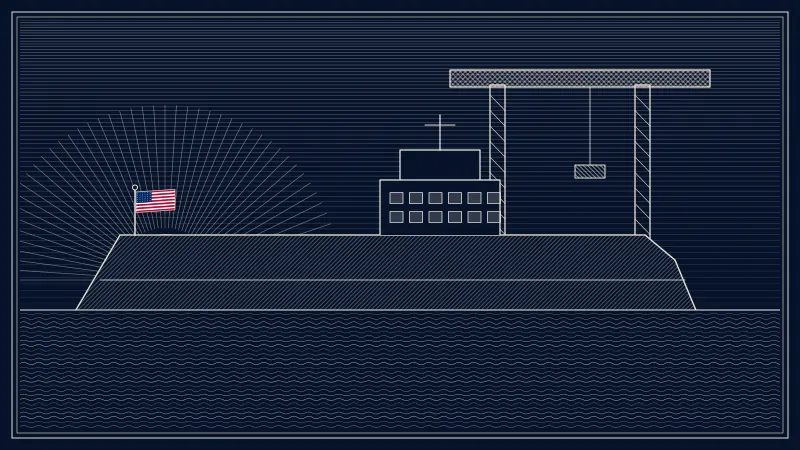
If you want one picture of what went wrong with American industry, don’t look at a closed steel mill. Look at the shipyards.
We used to be the country that built the ships that won wars. Now, according to a summary of the White House’s own maritime plan (opens in a new tab), less than one percent of the world’s commercial ships are built in the United States. Less than one percent. For the greatest maritime power in history, that’s embarrassing, and frankly, it’s dangerous.
The good news is we have a President who looked at that number and decided to do something about it.
The plan
On April 9, 2025, President Trump signed an executive order called “Restoring America’s Maritime Dominance,” and in February 2026 the White House released America’s Maritime Action Plan (opens in a new tab). I read through it, and what I like is that it treats shipbuilding like what it is: an industry that needs steady demand, smart financing and a real workforce, not just a ribbon-cutting.
The plan talks about expanding commercial shipbuilding capacity (opens in a new tab), modernizing procurement and streamlining regulations so ships get built faster and cheaper. It proposes things like Maritime Prosperity Zones to draw private investment to waterfronts, and a fee on foreign-built vessels coming into U.S. ports to fund a dedicated maritime trust. Some of that still needs Congress, and I’ll keep you posted. But the blueprint is on paper, and it’s serious.
The Navy is putting money behind it
Here’s the part that tells me this isn’t just talk. The Navy’s FY27 budget request (opens in a new tab) asks for $65.8 billion in shipbuilding funds to buy 34 ships: 18 battle force ships and 16 auxiliary ships. That includes a Columbia-class submarine, two Virginia-class submarines, the new FF(X) frigate, a destroyer and a bunch of the less glamorous ships a real fleet runs on, like oilers and landing ships.
As the Navy’s budget deputy, Rear Adm. Ben Reynolds, put it in the release: “This is the money that builds the future fleet.” I love that line, because it’s exactly right. Money in a budget becomes steel in a dry dock becomes a paycheck for a welder in Virginia or Mississippi or Maine.
Why this matters to regular folks
You might not live anywhere near the ocean. Doesn’t matter. A shipyard pulls in steel, engines, electronics, pipe, wire and paint from suppliers all over the country. When a yard gets a steady order book, the whole supply chain behind it gets to hire and invest. That’s the multiplier effect, and it’s why shipbuilding is one of the best things we can rebuild.
It also matters for peace. Peace through strength isn’t a slogan; it’s a strategy. Our adversaries respect capability. A Navy that can actually replace and grow its fleet keeps the sea lanes open and keeps American kids out of wars nobody wants.
Where I land
We didn’t lose our shipyards in a year, and we won’t rebuild them in a year. But for the first time in a long time, the White House, the Navy and private builders are all pulling in the same direction. That’s how comebacks start.
I can’t wait to see American-built ships sliding down the ways again. I think we’re going to see a lot of them.
Sources
- Department of the Navy, FY27 budget request (April 21, 2026) (opens in a new tab)
- White House, Restoring America’s Maritime Dominance (opens in a new tab)
- America’s Maritime Action Plan, February 2026 (PDF) (opens in a new tab)
- Norton Rose Fulbright, summary of America’s Maritime Action Plan (opens in a new tab)
Keep Reading
All stories Build
Build
72,000 Factory Jobs Since December. I’m Betting on a Lot More.
Let me be straight with you, because that’s the only way this blog works: the great American factory comeback is not finished. It’s barely started. But the start of something has a look to… Build
Build
100 Gigawatts to 400: Why I’m All In on Trump’s Nuclear Bet
I’ll admit it up front: I’m a true believer in nuclear power. So take this with whatever grain of salt you want. But the case is strong enough that you don’t have to take my word for it. Home
Home
America Is 250. We Haven’t Even Started Dreaming.
On July 4, 2026, the United States of America turned 250 years old. I keep saying that sentence out loud because it still kind of amazes me. Two hundred and fifty years since a bunch of…Pro-Life Isn’t One Issue. It’s Every Person, at Every Stage.